Thermal stress analysis for glass and glazing systems
WINTHS® is expert software for the precise calculation of thermal stresses in glazing and the effective prevention of thermally induced glass breakage.
Thermal stress analysis for glass and glazing systems
WINTHS® is expert software for the precise calculation of thermal stresses in glazing and the effective prevention of thermally induced glass breakage.
Set location, climate, orientation, glazing configuration and frame conditions.
2
Calculate Thermal Loads
Analyze solar radiation, shading effects and resulting temperature differences and thermal stresses.
3
Evaluate & Report
Review temperature distributions, thermal stress and glass breakage risk and generate professional documentation.
How It Works
1
Define Project Conditions
Set location, climate, orientation, glazing configuration and frame conditions.
2
Calculate Thermal Loads
Analyze solar radiation, shading effects and resulting temperature differences and thermal stresses.
3
Evaluate & Report
Review temperature distributions, thermal stress and glass breakage risk and generate professional documentation.
See WINTHS® in Action
Short product teaser
Get a quick overview of how WINTHS® 15099 helps you calculate thermal stress and consider glass breakage risks for individualized glazing configurations.
Get a quick overview of how WINTHS® 15099 helps you calculate thermal stress and consider glass breakage risks for individualized glazing configurations.
Project-specific climate data, solar radiation and geographical conditions
Learn More
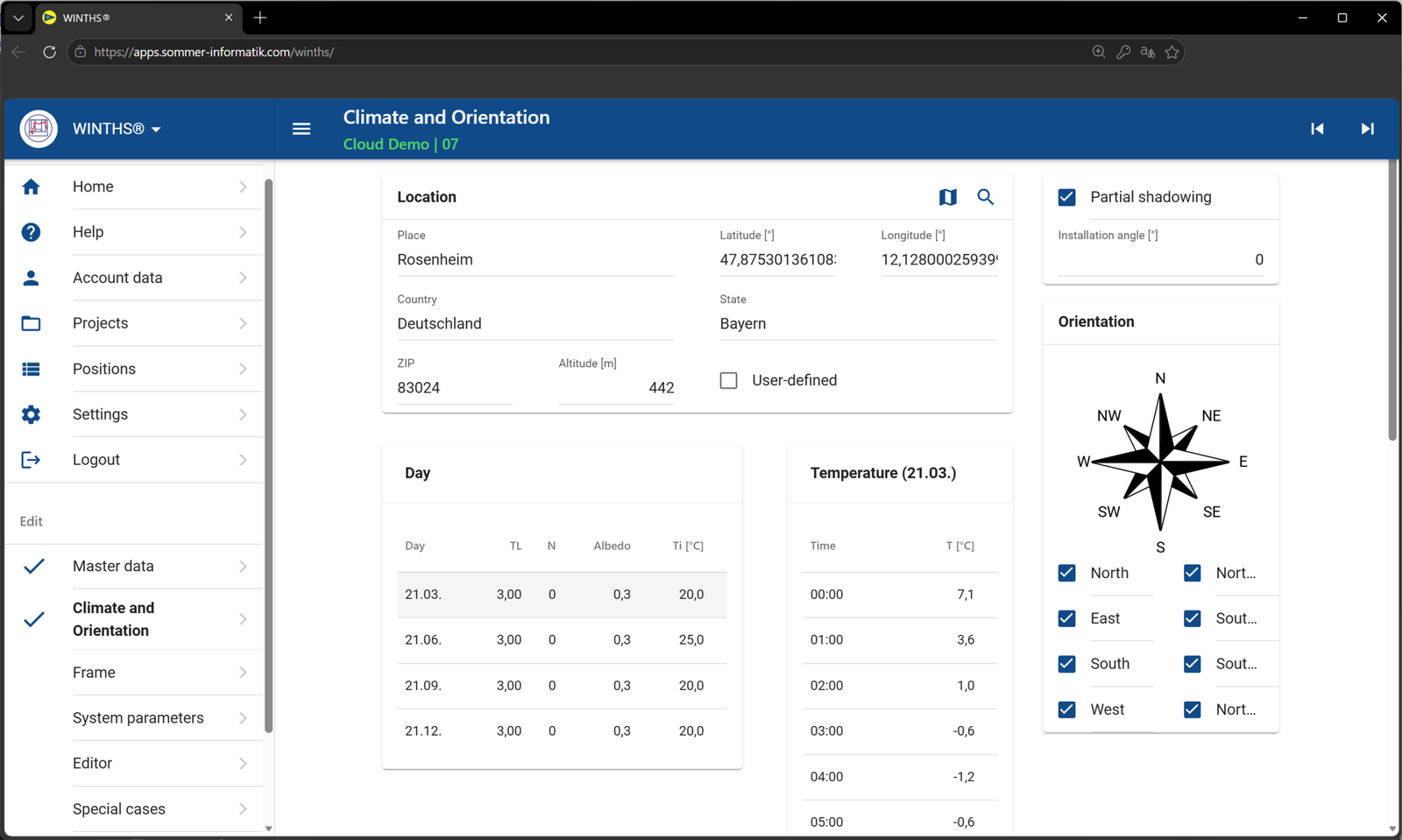
Location and climate data define the thermal boundary conditions for the glazing. Solar radiation, outdoor temperature and geographical conditions are considered to determine temperature differences and evaluate the resulting thermal stresses and risk of thermally induced glass breakage.
Glazing & Frame
Consideration of glass configuration, edge quality, gas fillings and frame properties
Learn More
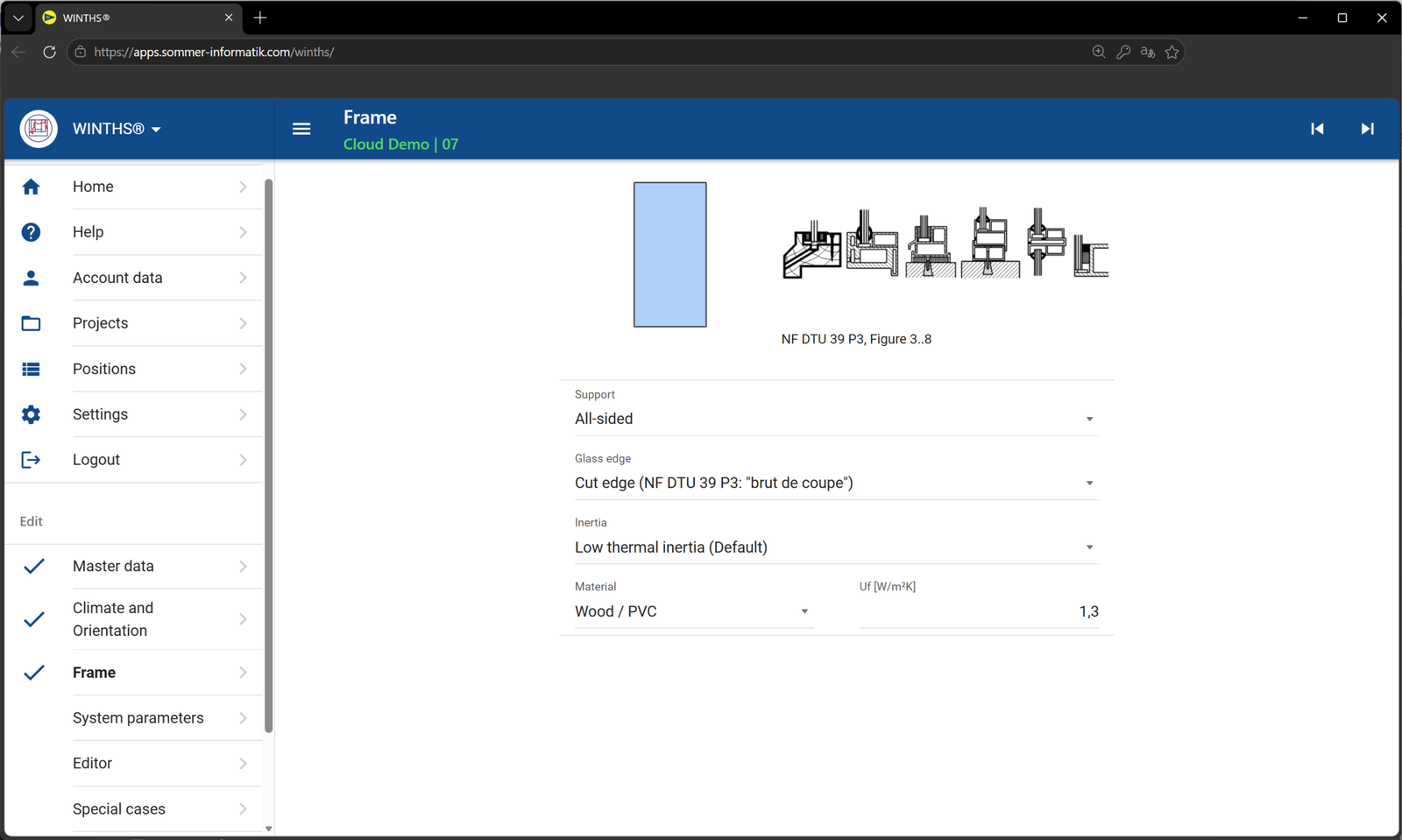
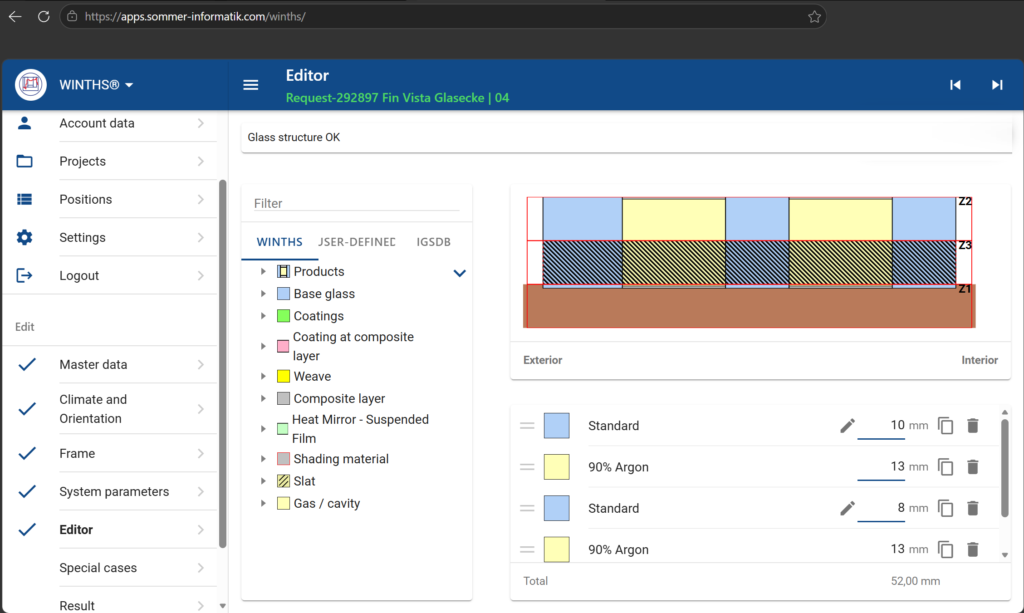
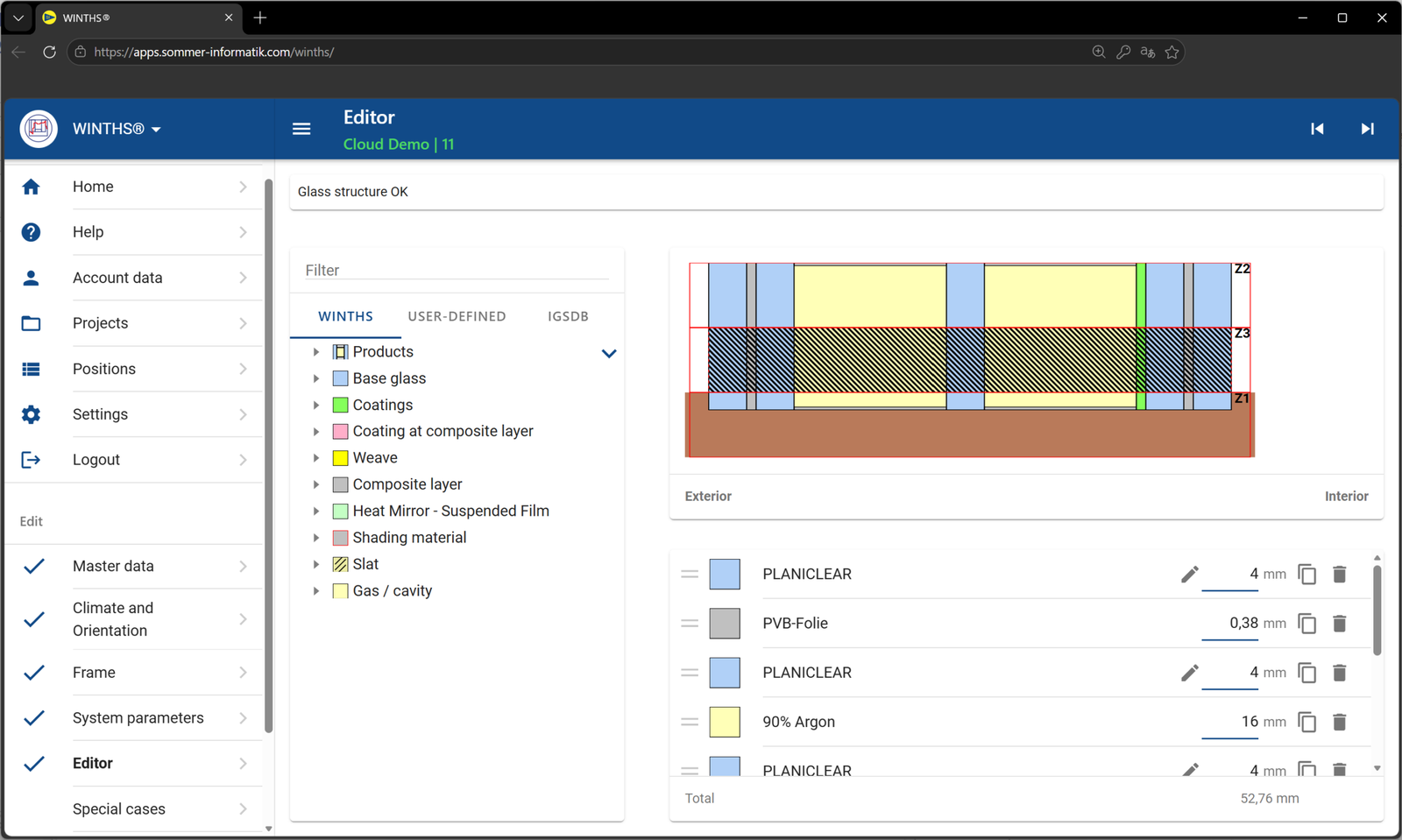
The glazing configuration and frame conditions have a direct influence on the thermal behavior of the glass. WINTHS® considers glass type, pane build-up, edge quality, gas fillings and frame properties to evaluate temperature differences and the resulting thermal stresses within the glazing.
Shading & Orientation
Analysis of orientation, partial shading and surrounding objects or shading systems
Learn More
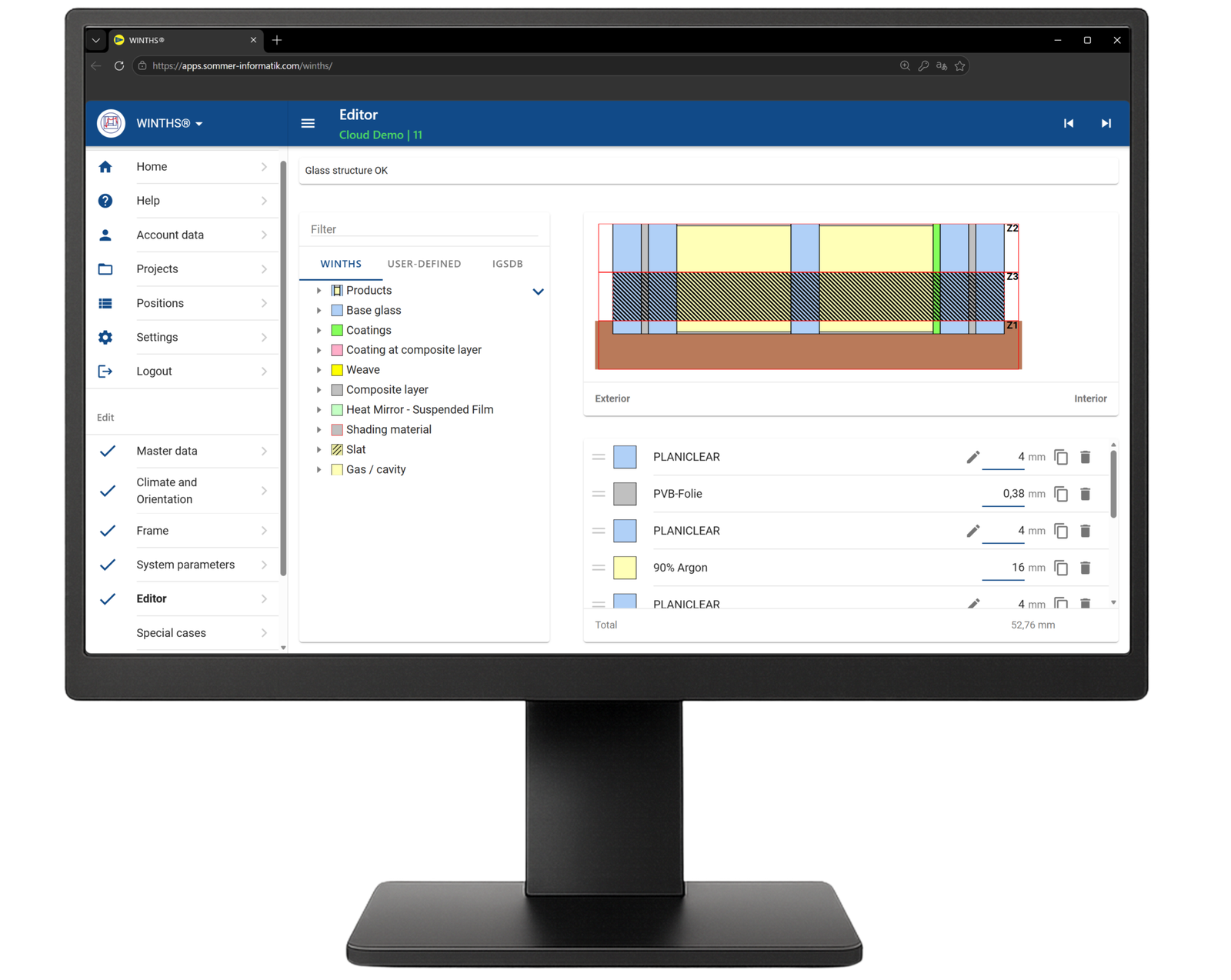
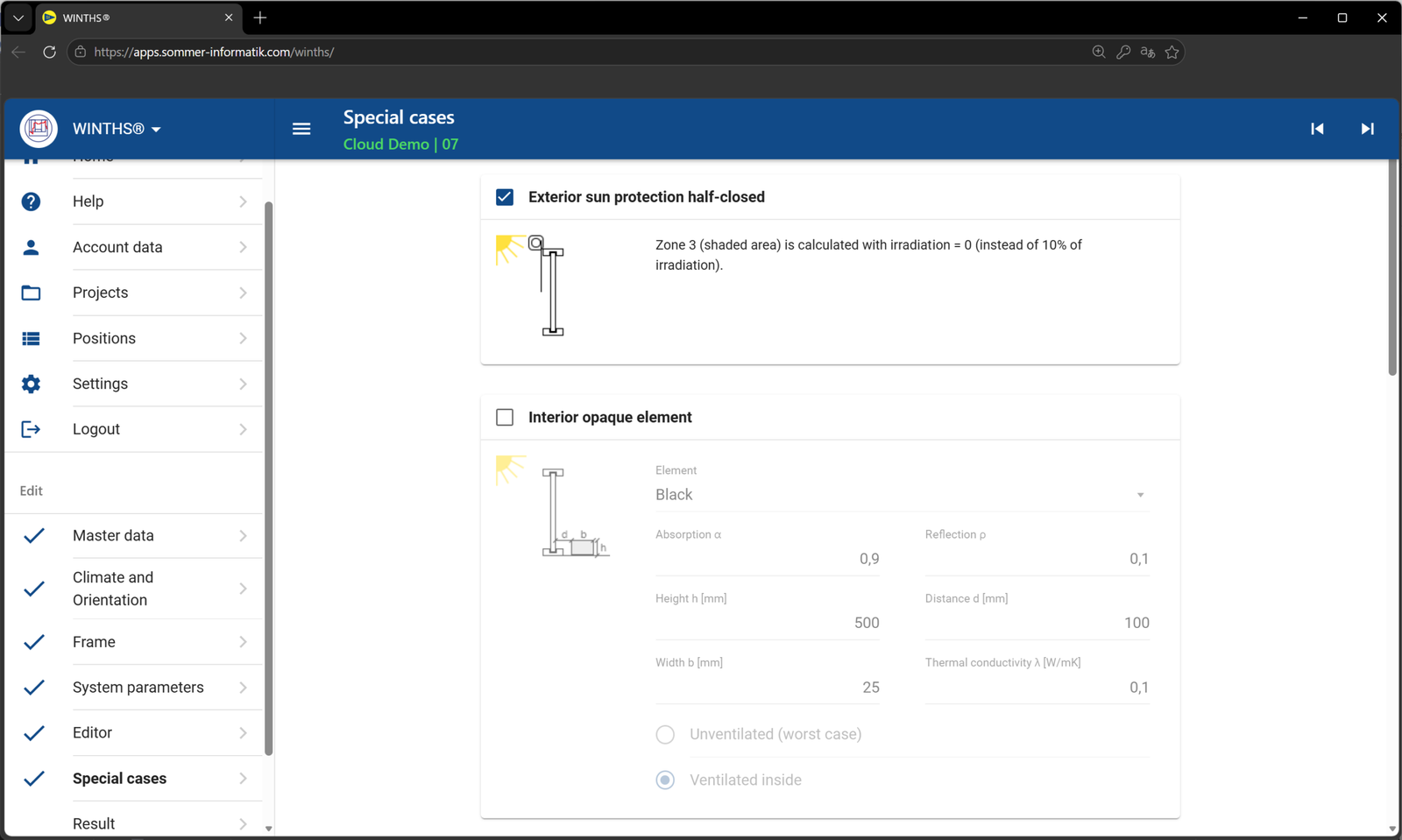
WINTHS® can analyze partial shading, surrounding objects and shading systems in combination with the orientation of the glazing. This helps identify uneven heating and critical temperature differences that may increase the risk of glass breakage.
Calculation Factors
Location & Climate
Project-specific climate data, solar radiation and geographical conditions
Learn More
Location and climate data define the thermal boundary conditions for the glazing. Solar radiation, outdoor temperature and geographical conditions are considered to determine temperature differences and evaluate the resulting thermal stresses and risk of thermally induced glass breakage.
Glazing & Frame
Consideration of glass configuration, edge quality, gas fillings and frame properties
Learn More
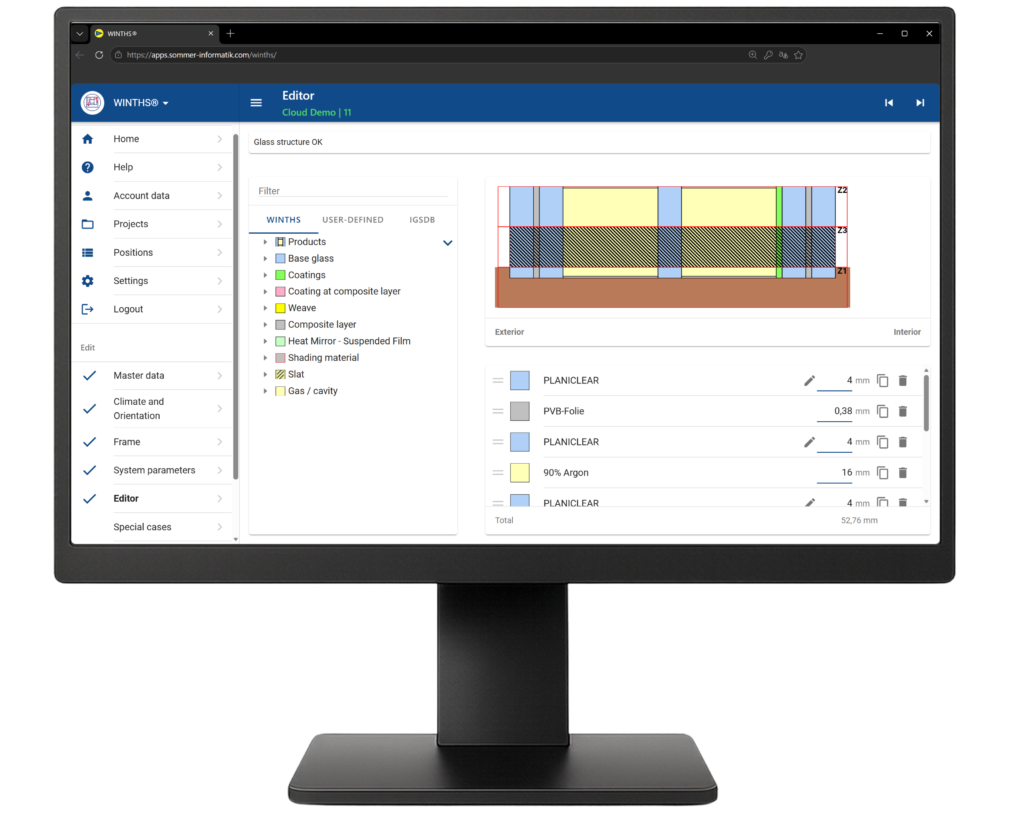
The glazing configuration and frame conditions have a direct influence on the thermal behavior of the glass. WINTHS® considers glass type, pane build-up, edge quality, gas fillings and frame properties to evaluate temperature differences and the resulting thermal stresses within the glazing.
Shading & Orientation
Analysis of orientation, partial shading and surrounding objects or shading systems
Learn More
WINTHS® can analyze partial shading, surrounding objects and shading systems in combination with the orientation of the glazing. This helps identify uneven heating and critical temperature differences that may increase the risk of glass breakage.
Software Gallery
See Your Results
Temperature distribution
Thermal stress
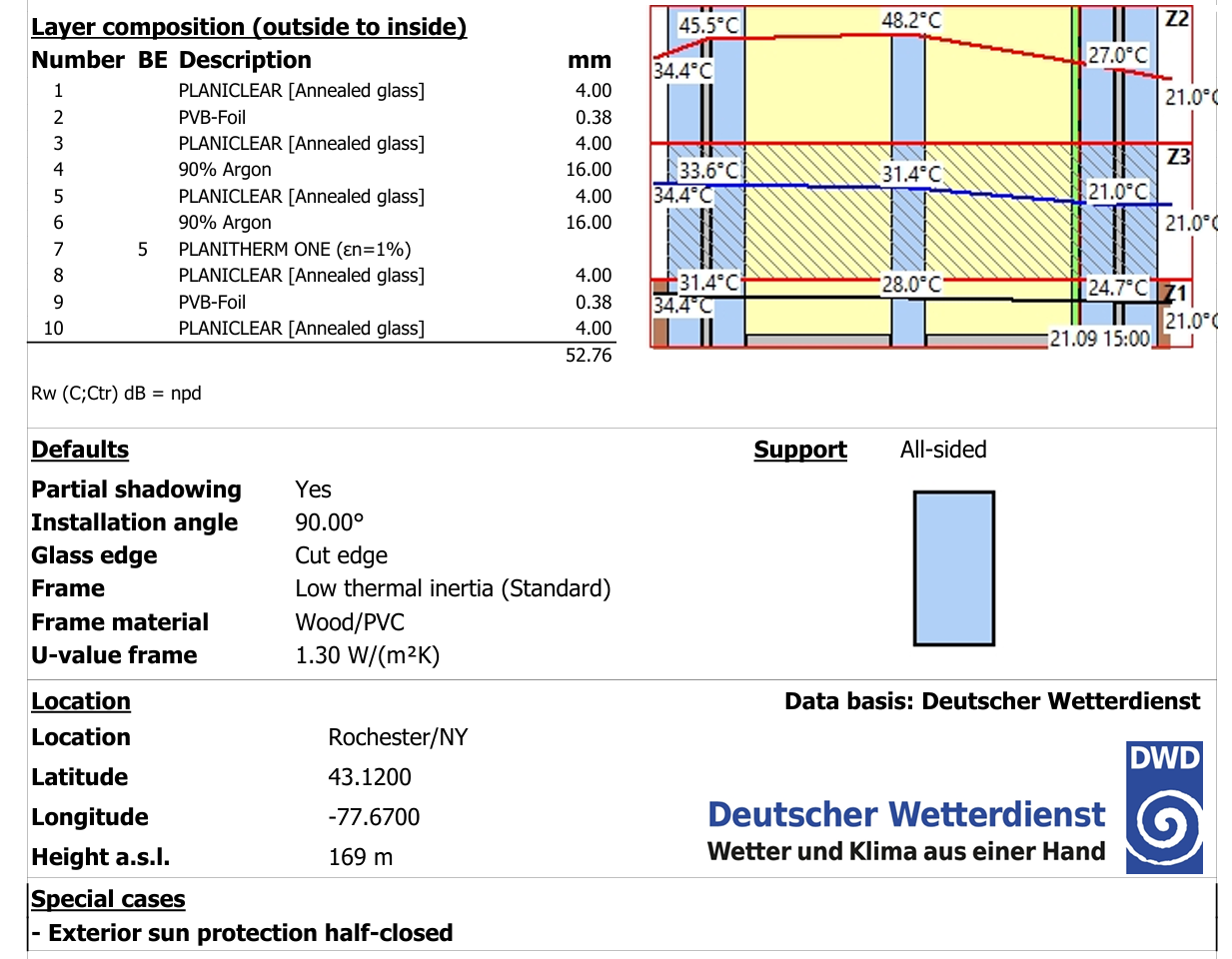
Critical temperature differences
Glass breakage risk
Professional reports
Software Gallery
See Your Results
Temperature distribution
Thermal stress
Critical temperature differences
Glass breakage risk
Professional reports
WINTHS® – Available Online
Use WINTHS® Online directly in your browser with no local installation required. Analyze thermally induced stresses in glass while considering location, climate, glazing configuration, frame design and shading conditions.
WINTHS® analyzes thermal loads and thermally induced stresses in glazing. Location, climate, solar radiation, glazing configuration, frame properties and shading conditions can be considered to identify critical thermal conditions and reduce the risk of glass breakage.
Which factors can be considered in a WINTHS® calculation?
WINTHS® considers factors including geographical location, climate data, orientation, solar radiation, glazing configuration, gas fillings, frame properties, glass edge conditions and partial shading.
Can WINTHS® analyze shading conditions?
WINTHS® can consider partial shading and shading caused by surrounding structures or shading systems. This helps identify uneven temperature distributions that may lead to increased thermal stress.
Is a free trail available?
A free trial version of WINTHS® is available. Register for free to try out the demoversion. No credit card needed.
FAQs
What can you do with WINTHS®?
WINTHS® analyzes thermal loads and thermally induced stresses in glazing. Location, climate, solar radiation, glazing configuration, frame properties and shading conditions can be considered to identify critical thermal conditions and reduce the risk of glass breakage.
Which factors can be considered in a WINTHS® calculation?
WINTHS® considers factors including geographical location, climate data, orientation, solar radiation, glazing configuration, gas fillings, frame properties, glass edge conditions and partial shading.
Can WINTHS® analyze shading conditions?
WINTHS® can consider partial shading and shading caused by surrounding structures or shading systems. This helps identify uneven temperature distributions that may lead to increased thermal stress.
Is a free trail available?
A free trial version of WINTHS® is available. Register for free to try out the demoversion. No credit card needed.
Ready to Start?
Try WINTHS® 15099 now and experience an efficient workflowfrom thermal calculation to professional result!